Why your construction money should never sit in a contractor's account
The single biggest risk for an overseas owner is not bad concrete. It is an advance paid with no bond behind it.
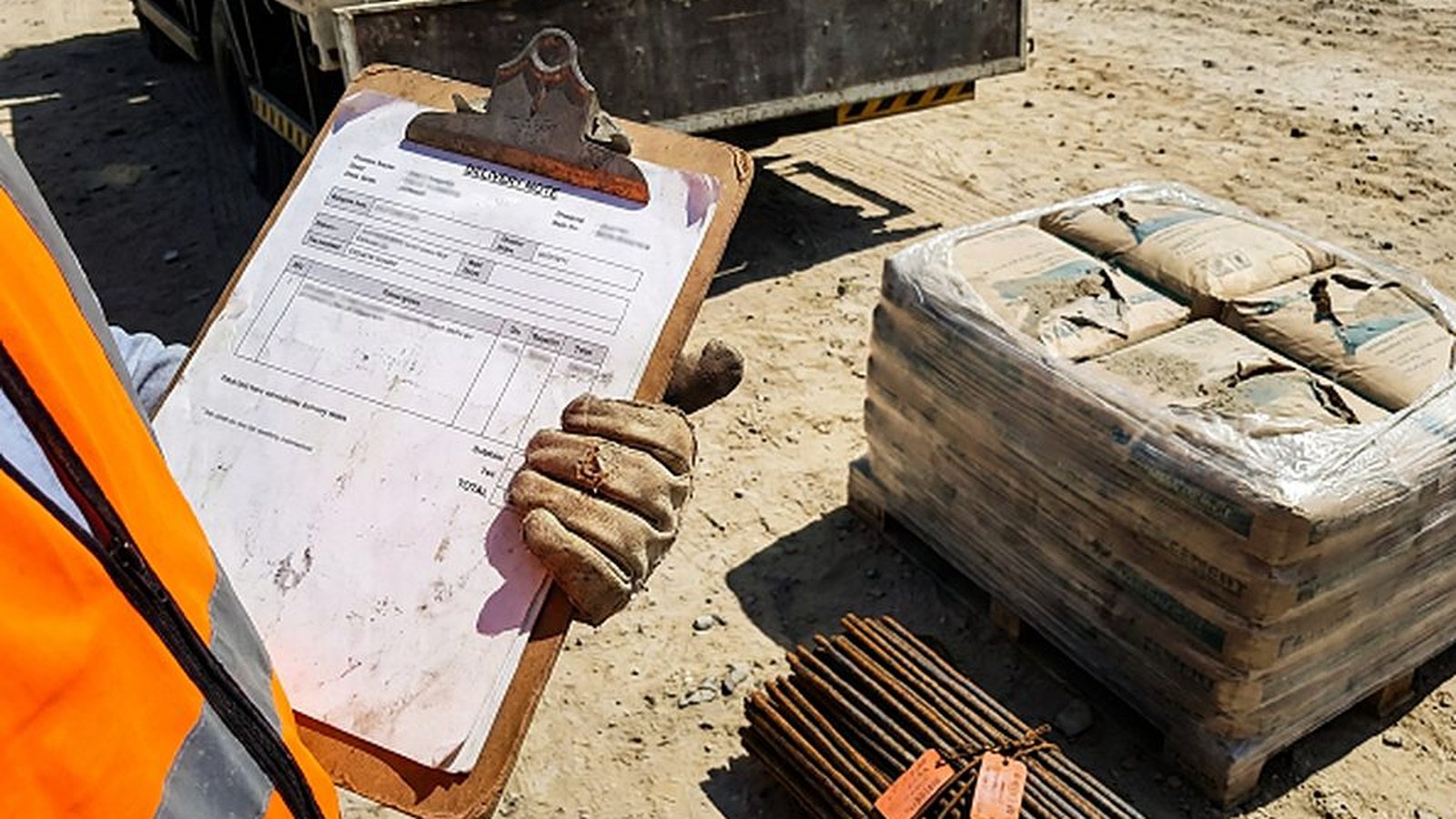
When you build from abroad, the usual model asks you to pay the contractor a large advance and then wait. On large projects that advance is protected by an advance payment bond from a bank. On small and medium projects it often is not: a bond costs money and needs bank credit lines, so many contractors, including good ones, cannot issue one. If the project then slows down, changes direction or the contractor runs into trouble on another job, the owner has nothing to fall back on.
The problem with advances
An advance with no bond pays for work that does not exist yet, and nothing protects it. You lose your strongest tool as an owner: the ability to pay only for what is done. Many disputes in construction start exactly here.
A different model
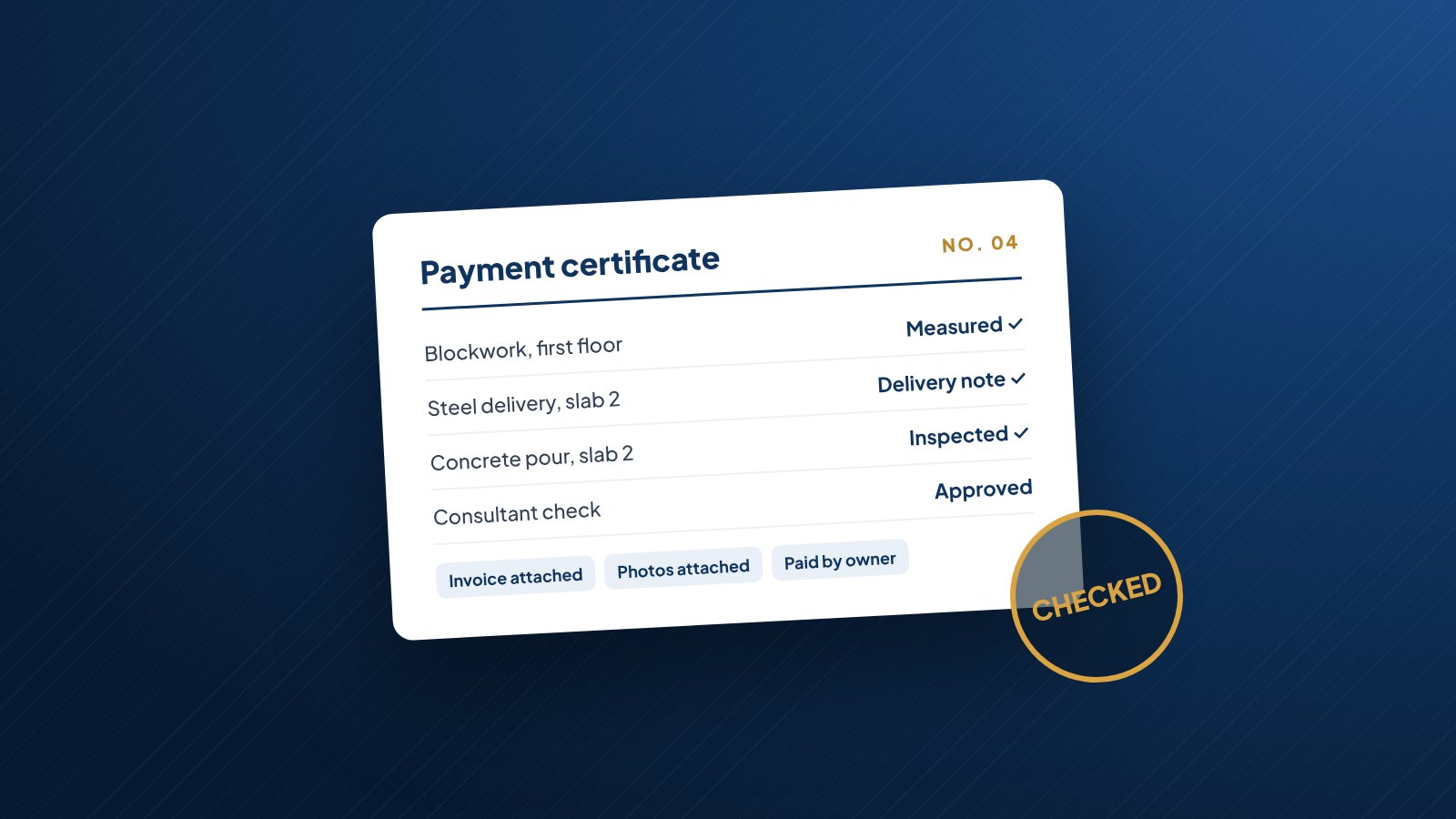
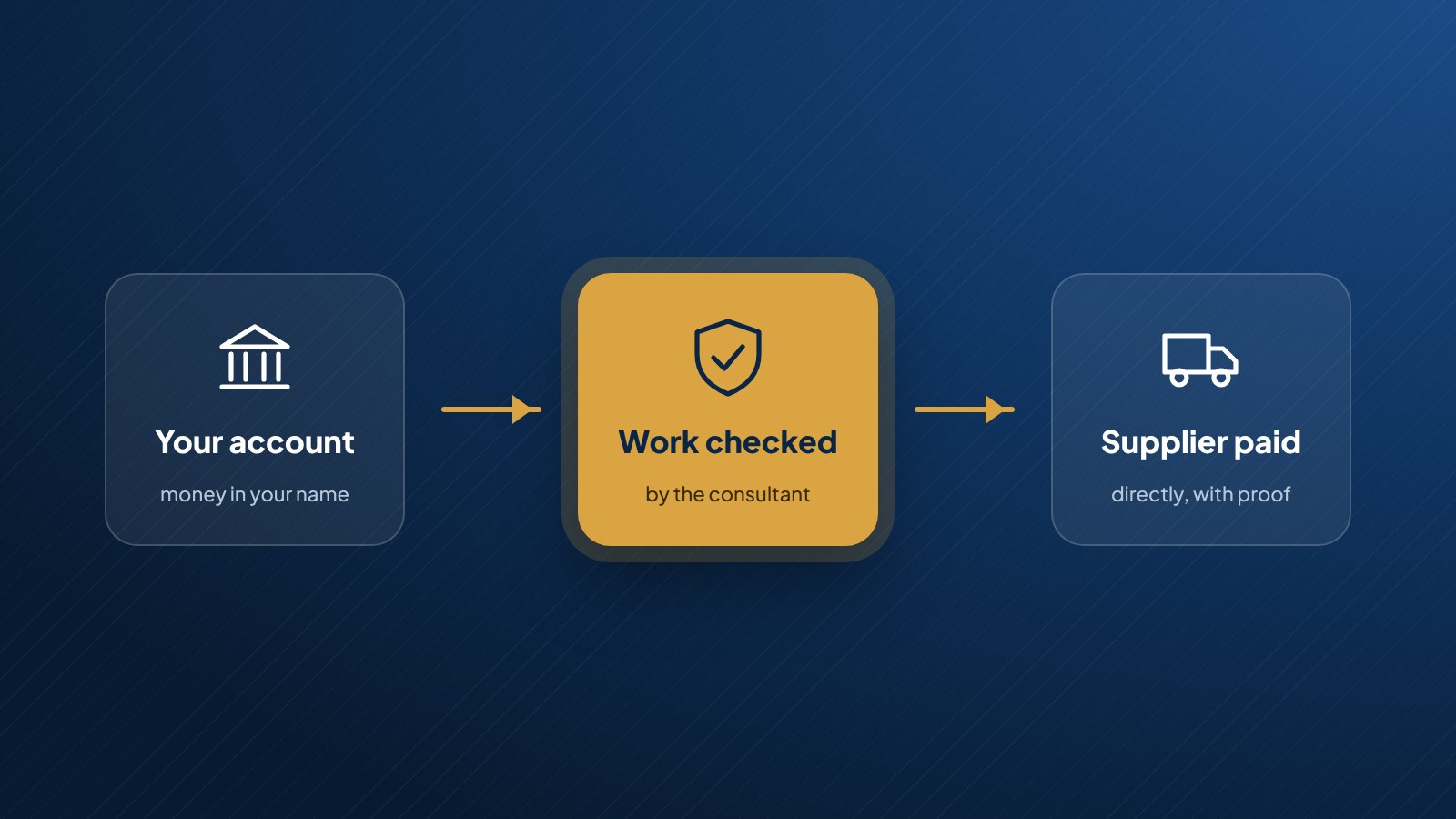
Under DirectFund, your money stays in an account in your name. Each month we issue a payment certificate showing the work done. The consultant checks it. Then you pay suppliers, subcontractors and us directly, each against an invoice and evidence.
- No advance payment to ALDOURI.
- Every payment matched to proof.
- Materials become yours on delivery.
No bond, no advance. With DirectFund you need neither.
What this means for you
You keep control from the first day to the last. You can stop, question or approve every payment, wherever you live. That is the reason we built our company around it.
Before you sign any building contract, read our practical guide: how to pay a contractor safely when you build your villa in the UAE.