How to pay a contractor safely when you build your villa in the UAE
A practical guide for owners building their own villa, especially from abroad: where the risk is, and how to structure payments.
Most problems between owners and contractors start with money paid before the work exists. When you build your own villa, the escrow rules that protect buyers of off-plan units usually do not apply to you: your protection comes from how your contract handles payments. Here is what to look at before you sign.
1. Know where the risk is
The biggest risk is an advance payment with nothing behind it. On large projects an advance is usually covered by an advance payment bond from a bank. On small and medium projects it often is not. Read why your construction money should never sit in a contractor's account.
2. Pay for measured work, not for dates
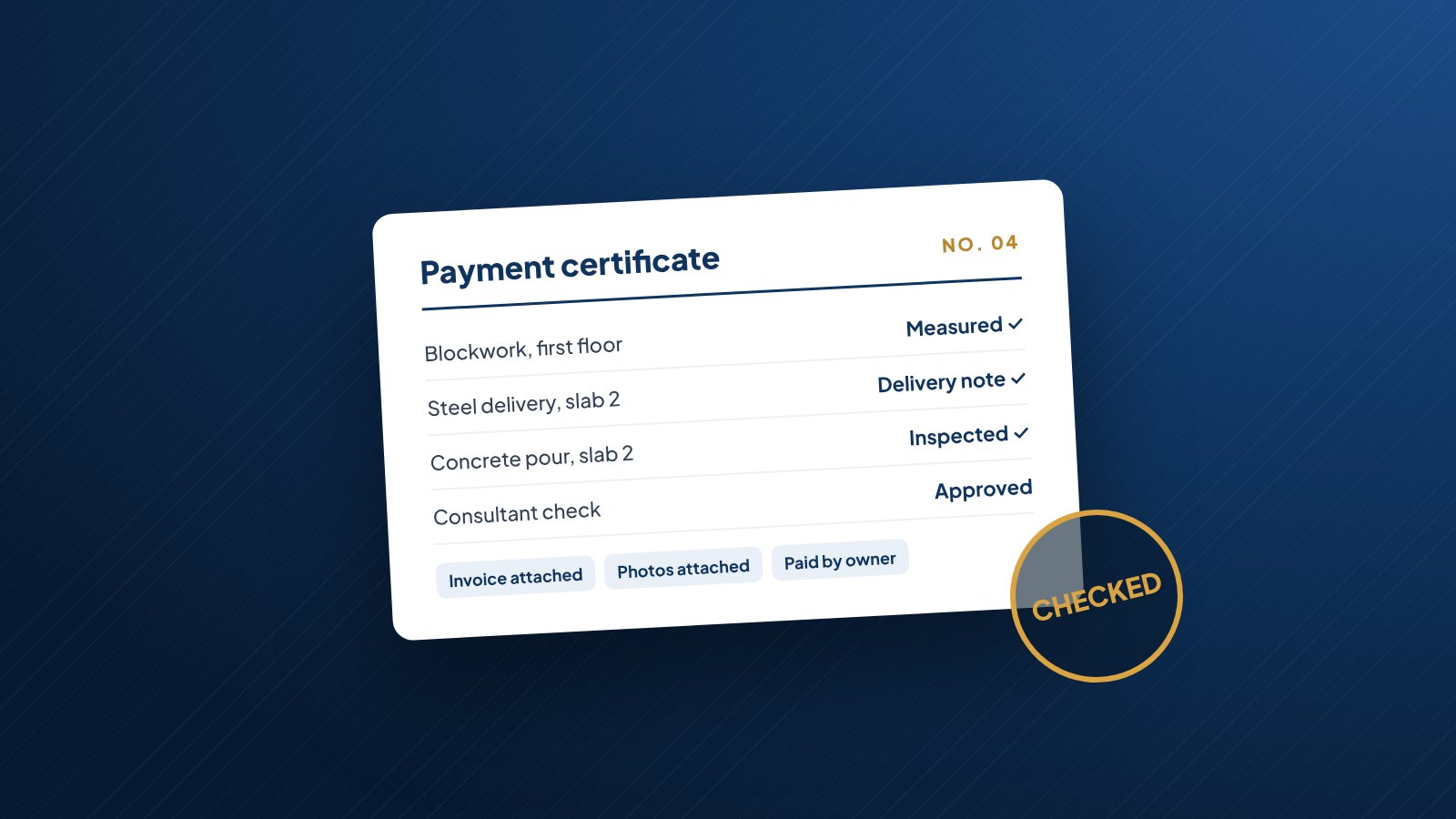
Link each payment to work that has been done and measured, not to a calendar. A monthly payment certificate should list the work done, the quantities and the value, with evidence attached. Read how payment certificates work.
3. Let someone independent check it
Your consultant, not the contractor, should check and certify each payment before you pay.
4. Pay major materials directly to suppliers
When you pay suppliers yourself, against a delivery note, the materials are yours on delivery and your money cannot be used for another project.
5. Check the contract before you sign
- Is any advance covered by a bank guarantee?
- Is there a retention, and when is it released?
- Who certifies payments, and with what evidence?
- Who owns materials on site, and from when?
- Are all payments made to the company's account in its trade name, against a tax invoice?
- What do the notice, suspension and termination clauses say?
6. Or keep the money in your own name
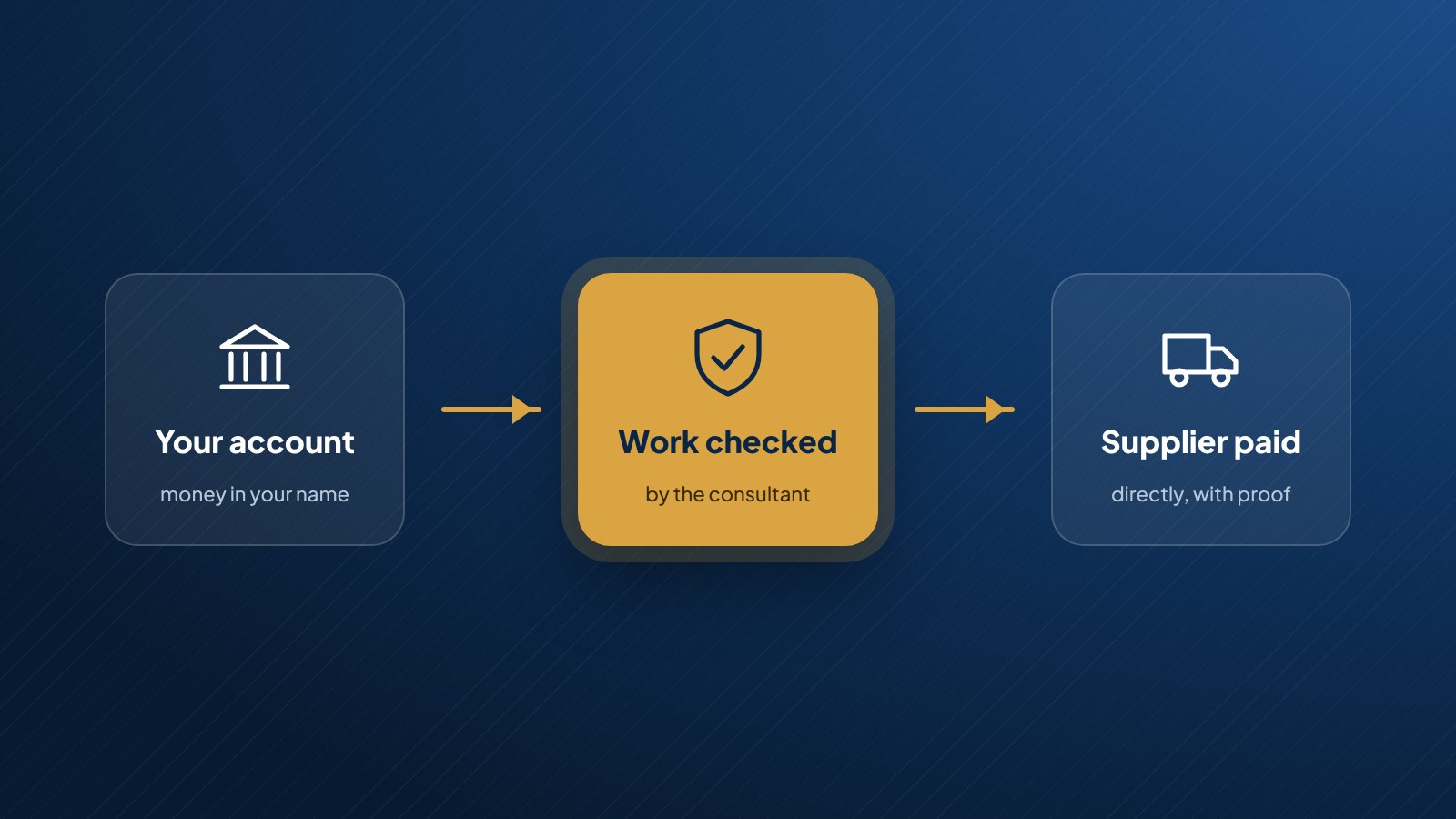
This is how DirectFund works: your money stays in an account in your name, we receive no advance, each month the consultant checks our payment certificate, and you pay suppliers, subcontractors and us directly against evidence.
We build in Dubai, Abu Dhabi and Sharjah.
This guide is general information, not legal advice. Please have your contract checked by your own lawyer or adviser.